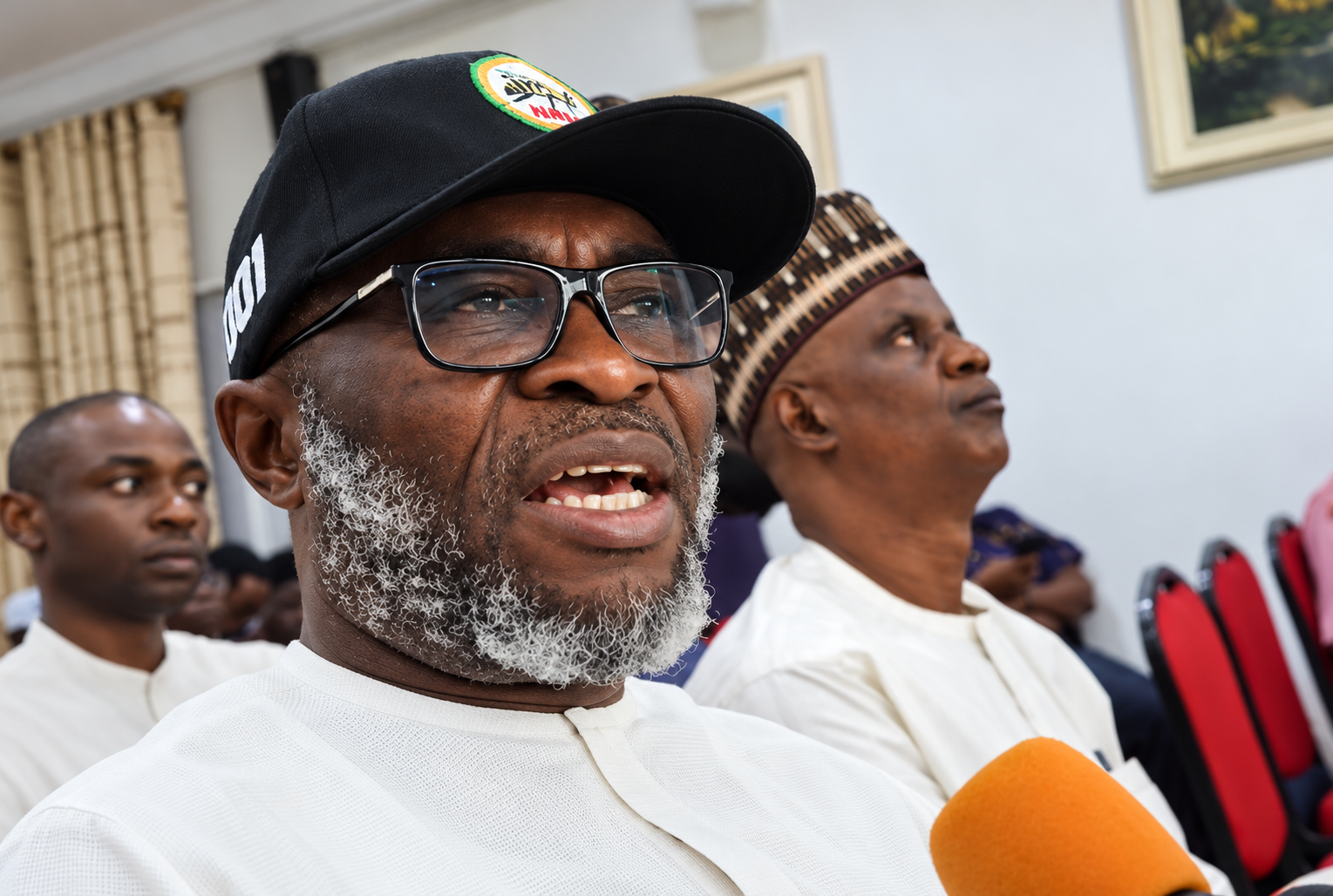
National Chairman of the National Rescue Movement (NRM), Prince Dr. Chinedu Obi, has challenged Nigeria’s political leaders and security agencies to confront the culture of impunity undermining democracy, warning that nobody is safe when violence goes unpunished and institutions surrender their responsibilities to political interests.
“Nobody wins in a bad situation,” Obi declared, calling for collective action to make public institutions work and compel politicians to obey the rules.
He spoke at the Electoral Integrity Summit 2026, organised by Kimpact Development Initiative (KDI) at Reiz Continental Hotel, Abuja. Obi, who also serves as Director-General of the Inter-Party Advisory Council (IPAC), represented the IPAC National Chairman.
The summit, themed “From Evidence to Action: Lessons from Ekiti and Osun for Nigeria’s 2027 Elections,” brought stakeholders together to examine electoral findings and their implications for the country’s democratic future.
Obi’s intervention placed a fundamental question before participants: what value does democracy offer if the struggle for public office continues to weaken the institutions meant to protect and serve citizens?
“We must, as a country, sit back to ask ourselves: is the type of democracy we have adopted and the way we practise it sustainable?” he asked.
“Is it likely to give us the kind of result that we want?”
Violence without consequences threatens everyone
Obi warned that political violence flourishes when perpetrators believe their connections place them beyond accountability.
“Actions that are not punished are more likely repeated,” he said.
“How do we record this level of violence, and the police is there watching?”
He argued that security officers themselves could eventually become victims of the impunity they fail to confront.
“Because if I could kill a civilian and nothing happens to me, what is the guarantee I can’t kill the police?”
His warning challenged security agencies to recognise that protecting citizens and enforcing the law impartially are essential to their own safety and the survival of public order.
Obi also questioned what he described as unequal treatment of political actors, when figures associated with the ruling All Progressives Congress (APC) were not facing the same scrutiny as opposition voices.
“Is it only when the opposition speak that they get punished?” he asked.
His remarks were a demand for equal enforcement of the law: political affiliation must never determine who faces consequences and who enjoys protection.
APC must answer for the gap between promises and daily life
The accountability question extends beyond election-day conduct. For the APC-led government, the test is the daily experience of Nigerians confronting insecurity, kidnapping, unemployment, expensive food and transport, unreliable electricity and inadequate public services.
Political victories offer little comfort to families afraid to travel, young people searching for decent work, patients struggling to afford treatment or businesses spending scarce income to generate their own electricity.
Schools, hospitals, roads and power supply are measures of whether government is serving the people. Campaign slogans cannot substitute for those results.
Recent World Bank assessments acknowledge improvements in Nigeria’s macroeconomic position while stressing that stronger growth must translate into productive jobs, poverty reduction and better living standards. The distinction matters: improved national accounts do not automatically mean improved household finances.
The political challenge facing the APC is therefore concrete: demonstrate how its policies will deliver safer communities, affordable necessities, functioning services and reliable livelihoods—and accept scrutiny where those results remain absent.
The connection to NRM’s Rescue Nigeria Blueprint
Obi’s demand for institutions that perform their duties reflects the central argument of NRM’s Rescue Nigeria Blueprint: national recovery requires accountable government and coordinated action across the systems that shape people’s lives.
Published accounts describe the blueprint’s 24 policy pillars as addressing security, economic recovery, education, healthcare, employment, infrastructure and institutional strengthening.
These priorities are interconnected. Insecurity disrupts farming and commerce. Unreliable electricity raises business costs. Weak education and healthcare restrict opportunity. Failing roads isolate communities and make goods more expensive.
Addressing those problems requires more than another round of promises. It requires institutions with clear responsibilities, public resources tied to measurable outcomes and consequences for abuse.
At the summit, Obi placed responsibility on political leaders, civil society and security institutions alike.
“A collaborative effort,” he said, was needed “to ensure that we get institutions to do what they need to do.”
For the NRM chairman, the approach to 2027 must begin with that standard: institutions must work, politicians must obey the rules, and violence must carry consequences.
His warning was unmistakable.
“Nobody wins in a bad situation.”