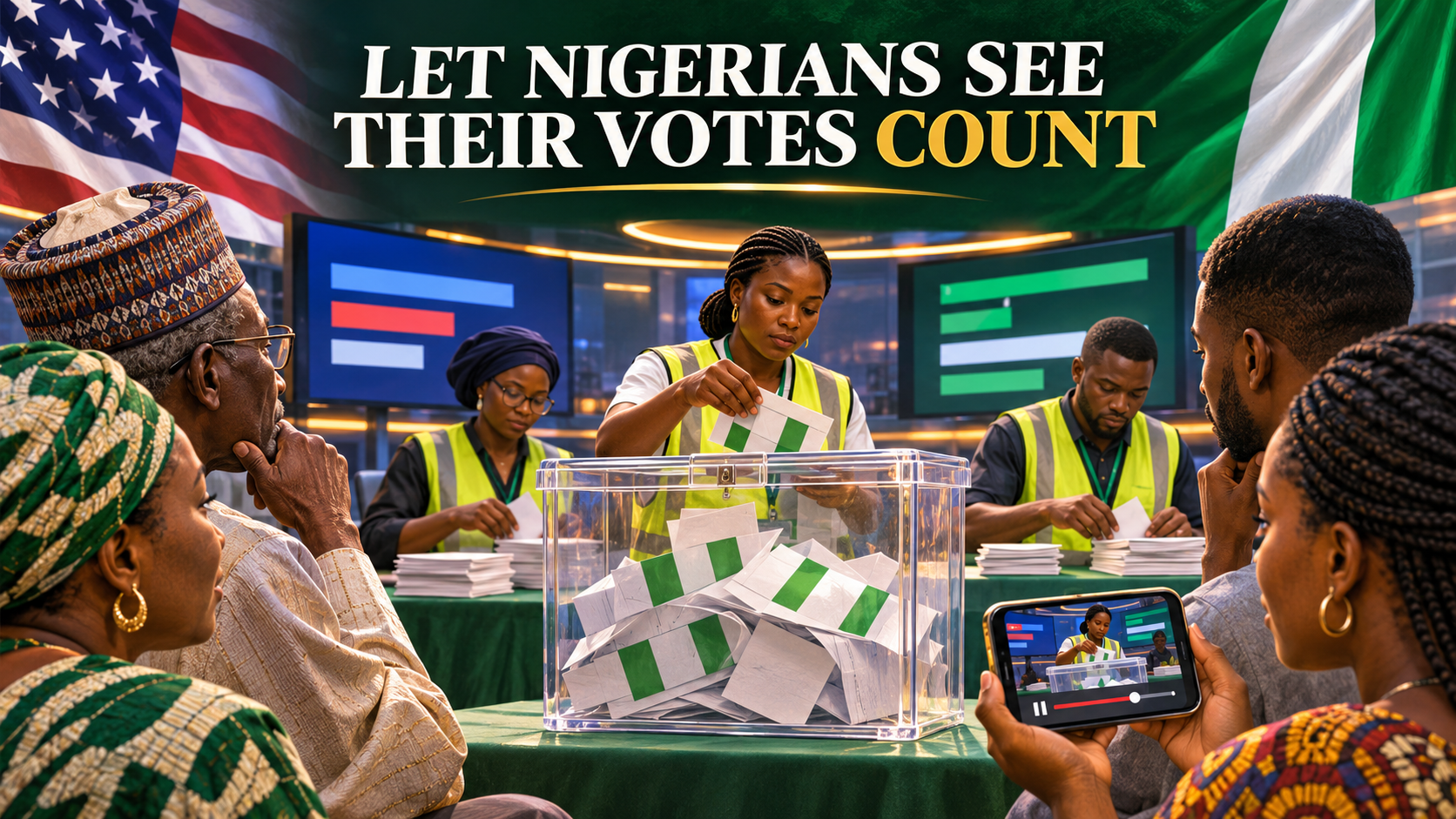
American voters have delivered a forceful reminder. In the November 3 midterm elections, Democrats won control of the House of Representatives and Senate, dealing President Donald Trump and his Republican Party a sweeping setback. Trump remains president, but voters have withdrawn his party’s control of Congress. That distinction matters: accountability can begin by changing the lawmakers who enable an administration.
For Nigeria, approaching its presidential and National Assembly elections on January 16, 2027, the lesson is urgent. No leader owns the electorate. No governing party deserves permanent protection from the consequences of its performance.
The democratic message is simple: If you take our lives for granted, break your promises and fail to deliver, we can vote you out.
What Americans were rejecting
No election has one explanation, and no responsible analysis can claim to know every voter’s motivation. But the reporting and voter surveys identify a powerful combination: living costs, disappointment with economic promises, corruption concerns, opposition to the Iran war and demands for stronger checks on presidential power.
Trump campaigned on making life more affordable. Yet voters continued to struggle with everyday expenses. Tariffs added to concerns about prices, while the Iran war compounded economic pressures. For families measuring economic success through groceries, housing and household bills, presidential assurances could not substitute for financial relief.
Energy promises offered a particularly measurable test. Trump pledged to halve energy costs within his first year. But the promised transformation was not delivered within the stated deadline.
His peace promises also invited scrutiny. The pledge to end the Russia-Ukraine within 24 hours was not fulfilled even more than a year later. His promise to avoid another foreign military entanglement stood in sharp contrast to the war against Iran and the incursion into Venezuela. Those are distinct failures: one concerns a missed deadline for ending an existing war; the other concerns taking the country into new conflicts.
Corruption and the exercise of power also mattered. The AP Voter Poll found widespread dissatisfaction with Trump’s priorities and a strong desire for Congress to do more to check presidential power. The outcome should not be mistaken for unconditional faith in Democrats: many voters remained dissatisfied with both parties.
That strengthens the lesson. Citizens can withdraw support without believing that any replacement deserves a blank cheque.
Nigeria must examine promises against results
President Bola Tinubu’s administration should face the same fundamental test: what was promised, what has been delivered and how have Nigerians’ lives changed?
Electricity is an obvious starting point. Tinubu promised stable supply and an end to estimated billing. His widely reported campaign remarks linked a second-term vote to delivery, although APC representatives now insist the pledge must be read alongside his qualification about explaining any shortcomings. Voters should examine the full statement and the actual record.
The administration can point to reforms and additional metering. But NERC’s published figures put national metering at 63.10% by August 2026. That is progress, and also clear evidence that universal metering remained unfinished. Reuters reported in February that inadequate gas supplies were forcing load shedding. The distance between policy announcements and dependable electricity remains a legitimate electoral question.
For a business paying for backup generation, unreliable power is an additional operating cost. For a household, it affects comfort, study, food storage and the value of every utility payment. Nigerians are entitled to judge electricity policy by those consequences.
Security presents another test. In his inaugural address, Tinubu made security his administration’s highest priority and promised action against terrorism and criminality. Yet mass abductions and lethal attacks remain part of the national experience. Reuters reported in October 2026 that gunmen killed at least 20 people in an ambush on traders travelling under military escort in Zamfara.
The bravery of security personnel deserves recognition. Their sacrifices also make effective leadership, equipment, coordination and public accountability essential.
Food security, employment and poverty reduction were central promises too. Tinubu pledged an economy that would create jobs, strengthen food security and end extreme poverty. His government subsequently announced measures to protect farmers, improve irrigation and storage, and moderate food-price volatility. Nigerians can fairly demand evidence of what those commitments have achieved.
The World Bank’s October 2026 update reported stronger economic performance and public finances, and projected average growth of 4.4% over 2026–2028. A credible assessment must acknowledge that progress.
But stronger government revenues are a means to improving lives. They cannot be the final measure of success. The World Bank estimates that 123 million Nigerians lived in extreme poverty in 2025. Slower inflation also means prices are rising less quickly; it does not automatically restore what families could previously afford.
The electoral questions remain concrete: Can earnings cover essential expenses? Are productive jobs expanding? Can farmers reach their land safely? Are public services improving enough to reduce the burdens families carry?
Public money must serve the public
Accountability must extend beyond the presidency to senators and members of the House of Representatives.
BudgIT’s analysis identified 11,122 projects worth ₦6.93 trillion inserted by the National Assembly into the 2025 budget. The organisation raised serious concerns about priorities, transparency and projects assigned to agencies outside their proper mandates. These findings demand public explanation and scrutiny. They are not, by themselves, judicial proof that every insertion was theft.
The controversy over lawmakers’ expensive vehicles illustrates the gulf between official priorities and public hardship. Reports put the proposed vehicles at ₦160 million each. The House defended them as official vehicles belonging to the National Assembly, rather than personal gifts. That explanation belongs in the record; so does the public’s right to question the cost and necessity.
Legal authority to approve expenditure does not remove the obligation to demonstrate public value.
A culture of impunity grows when serious questions produce denials, partisan defence or silence without transparent resolution. Its antidote is disclosure, independent investigation, due process and consequences where wrongdoing is established.
Every constituency deserves accessible project records, procurement details and evidence of completed work. Every legislator seeking another term should explain how public money entrusted to that office improved public life.
The NRM alternative must be judged by a demanding standard
Nigeria also needs a credible programme for change.
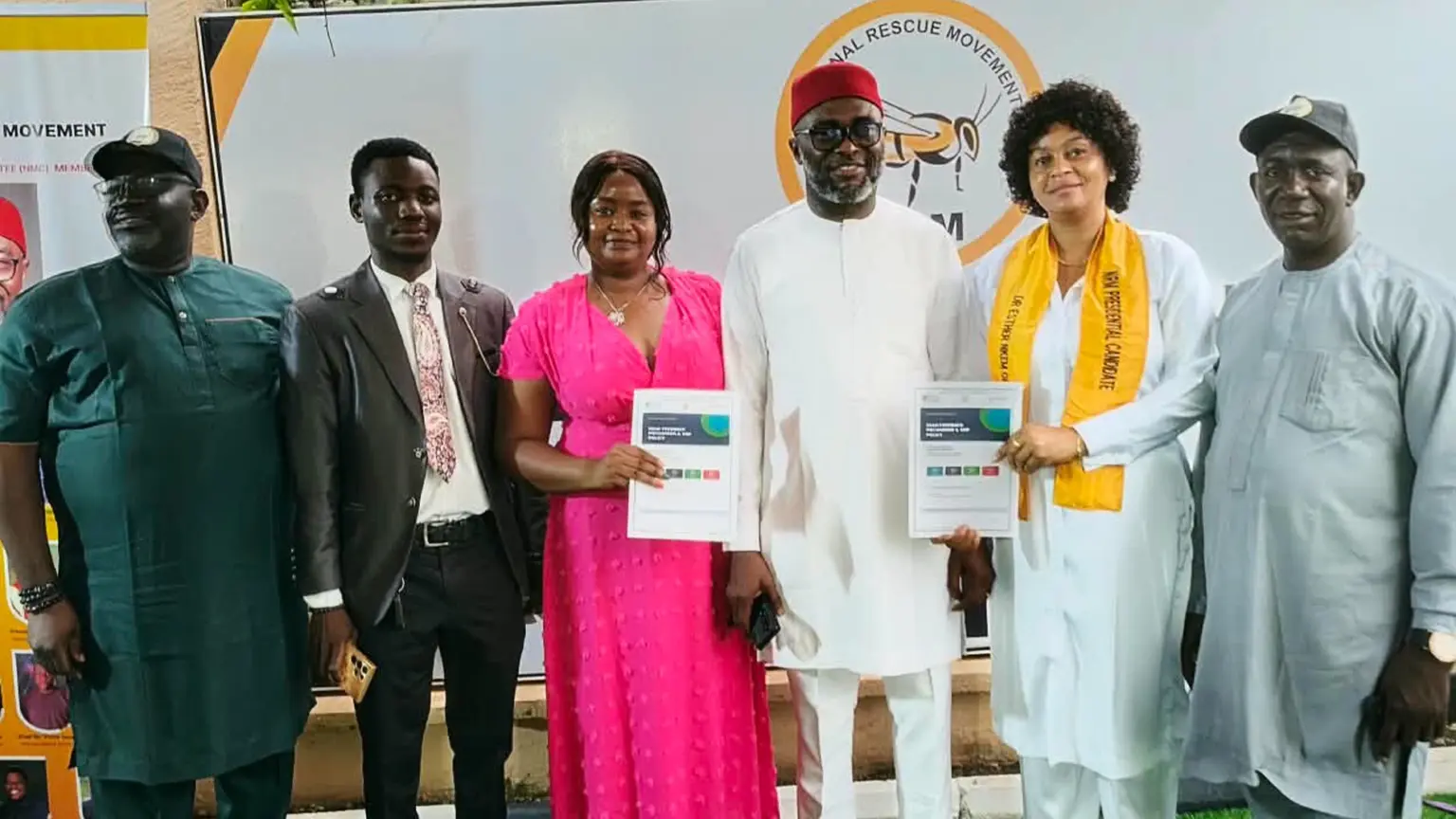
The National Rescue Movement’s presidential candidate, Dr Esther Nkem Okereke, presents the ESTHER Agenda alongside the party’s broader Rescue Nigeria Blueprint. Her six priorities cover energy, education and economic renewal; security and social welfare; technology and transparency; healthcare and housing; enterprise and employment; and recovery and reorientation.
Her proposal to direct recovered stolen public wealth into a National Recovery Infrastructure Fund connects anti-corruption efforts to roads, mini-grids and other productive assets. It offers a concrete principle: recovered resources should return to the people through useful public investment.
Turn frustration into democratic power
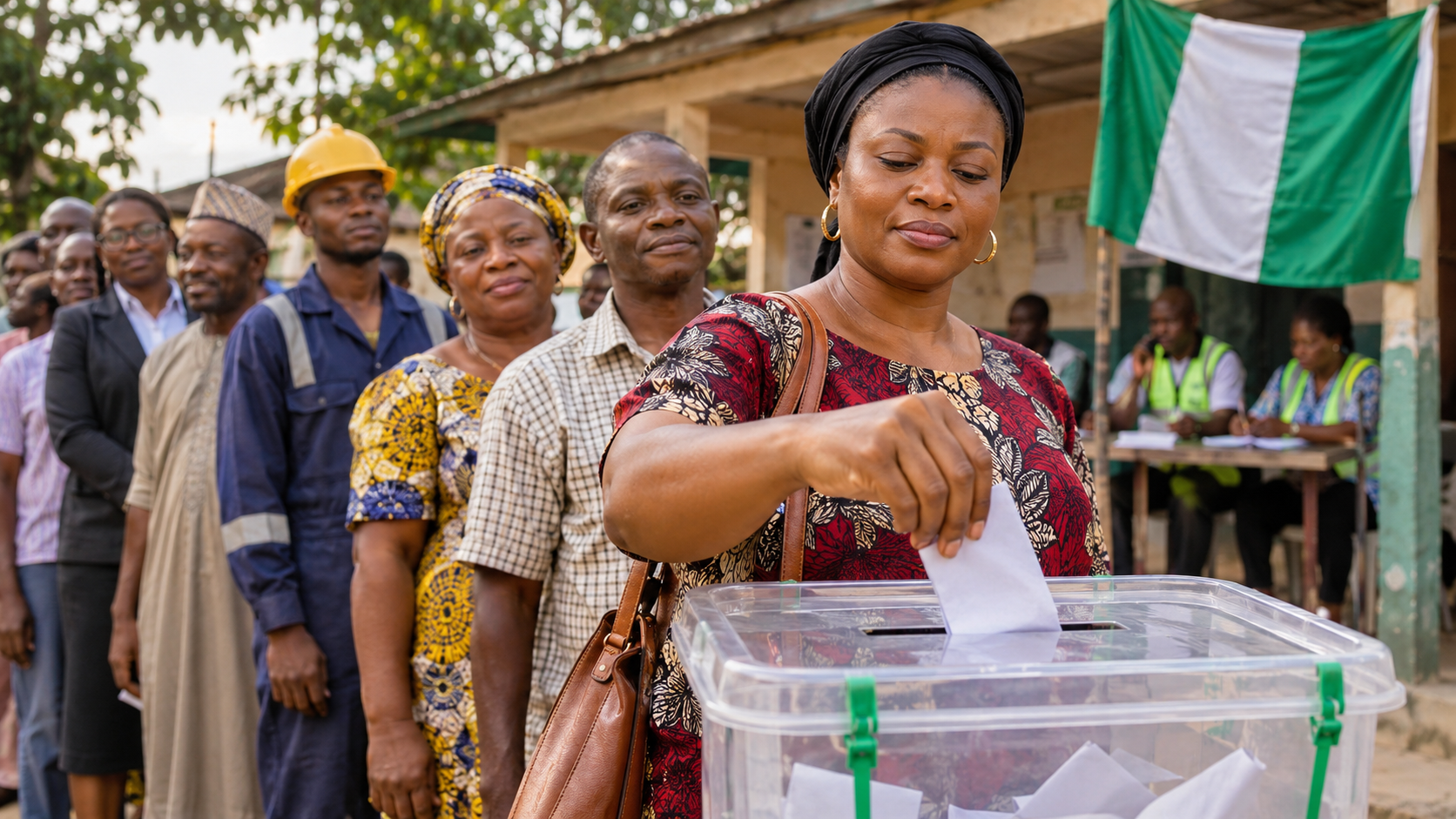
January 16 is an opportunity for the Nigerian people to judge both executive leadership and legislative performance. Nigerians must prepare to vote.
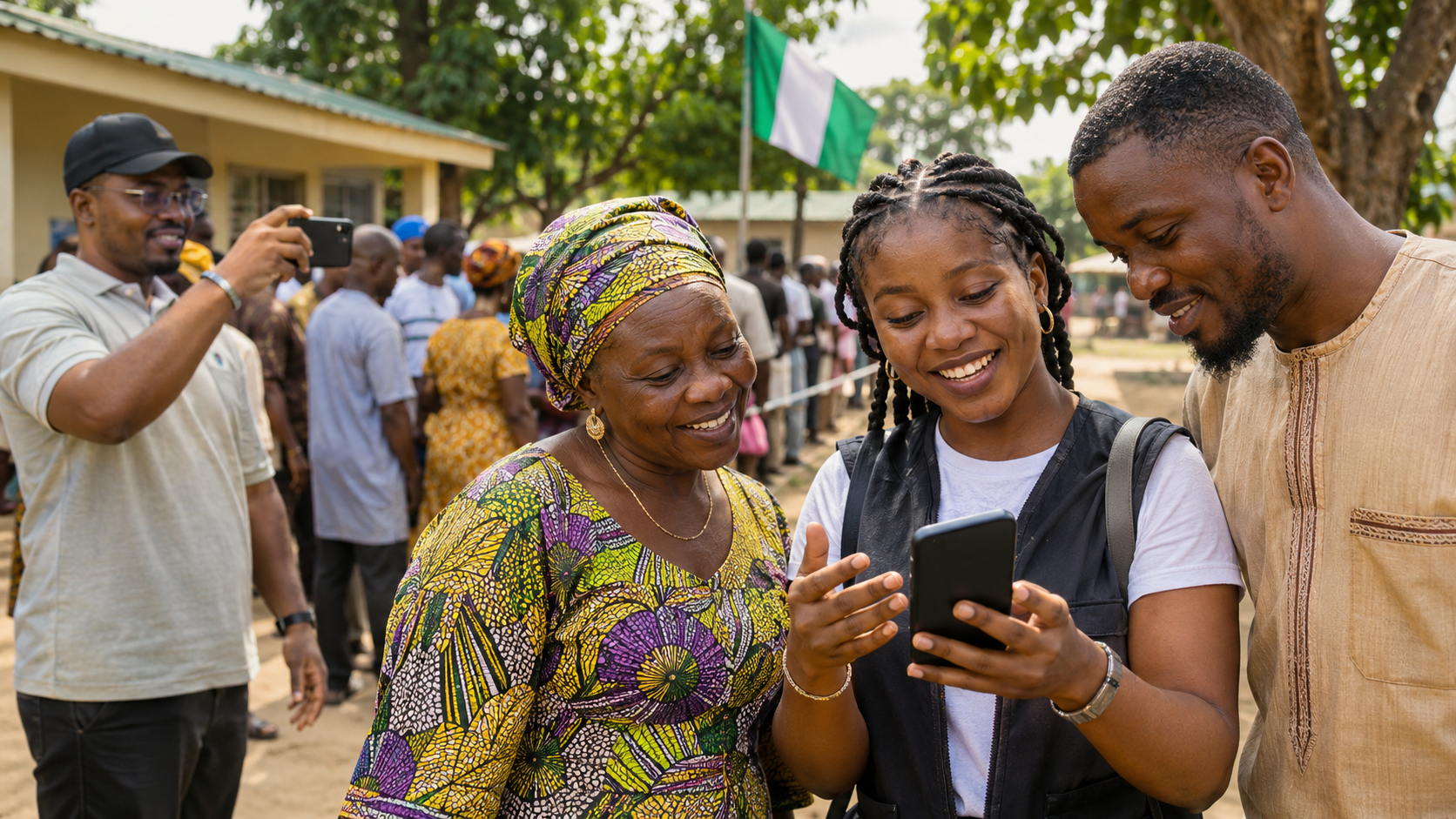
Verify polling information through INEC. Examine candidates and their programmes. Reject vote buying, intimidation and misinformation. Support lawful observation and transparent counting, and use lawful channels to challenge irregularities.
Then continue demanding answers after the election.
A ballot is an instruction about how a nation should be governed. Nigerians can use it to insist that electricity, security, food, employment and honest stewardship of public money take priority over political comfort.
America’s election offers no automatic solution to Nigeria’s problems. It offers a reminder that electoral loyalty can be withdrawn.
If you fail the people, the people can vote you out. And whoever replaces you must answer to them too.